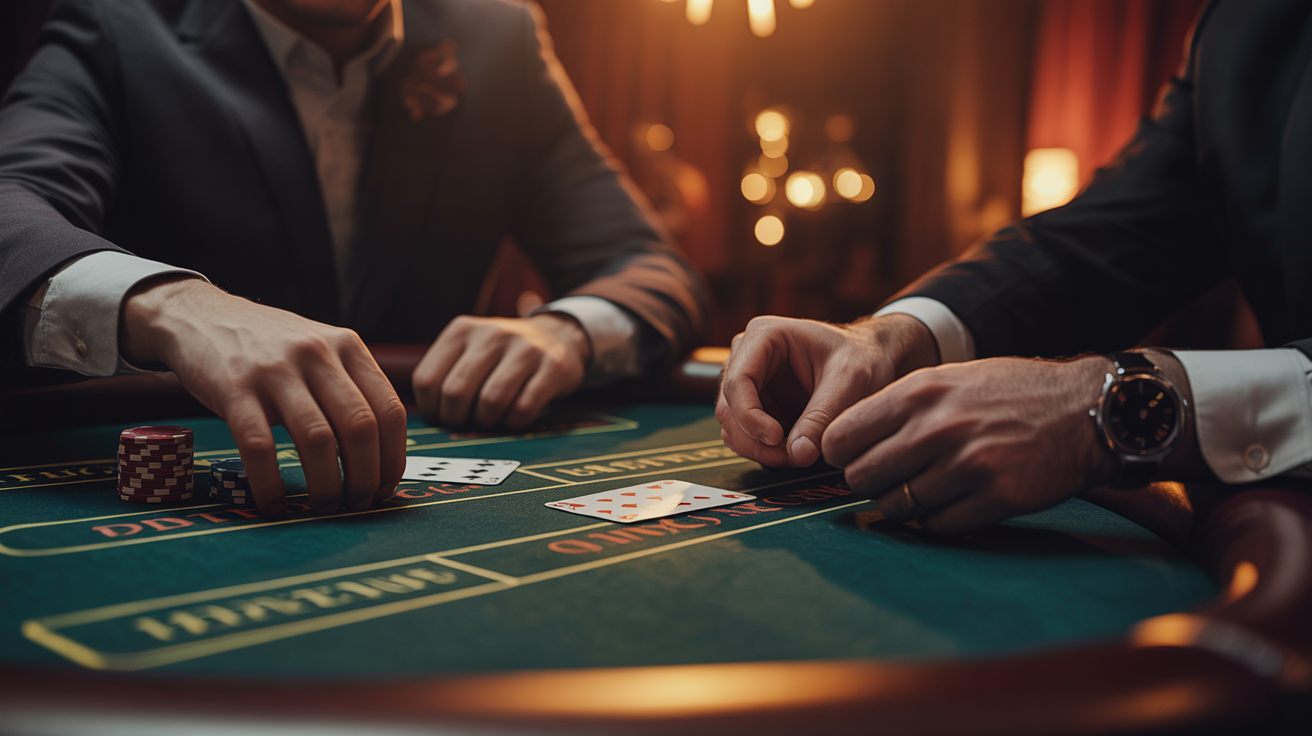
The Psychology of Bet Sizing: Reading Your Opponents
Every bet tells a story. Learn to decode the psychological signals hidden in your opponents' wager sizes.
The Psychology of Bet Sizing: Reading Your Opponents
Every chip pushed across the felt carries a message. Most players focus on what their opponents bet — but the elite read how they bet. Bet sizing is one of the most psychologically revealing behaviors at the poker table, a window into cognitive load, emotional state, and hand confidence that most players leave wide open.
This is not about pot odds or GTO ranges. This is about the human being sitting across from you — the one whose hands hesitate before a large bet, whose sizing patterns shift when the board runs out badly, whose overbet on the river screams one of two things: monster or bluff. Learning to decode these signals is what separates the predator from the prey.
Why Bet Sizing Reveals More Than Strategy
In a vacuum, bet sizing is a strategic tool. In reality, it is a behavioral fingerprint.
When a player is under cognitive load — processing a complex board texture, calculating pot odds, managing emotional pressure — their decision-making becomes less deliberate and more reflexive. This is where behavioral leakage occurs. The sizing they choose is no longer purely strategic; it is contaminated by their internal state.
Consider these psychological realities:
- ♠Confidence produces consistency. A player who knows their hand is strong tends to bet with mechanical precision — the same percentage of the pot, the same deliberate motion, the same neutral expression.
- ♠Uncertainty produces deviation. When a player is unsure — bluffing, semi-bluffing, or holding a marginal hand — their sizing often breaks from their established baseline.
- ♠Anxiety inflates bets. Many recreational players overbet when bluffing, unconsciously trying to "buy" the pot with intimidation rather than logic.
Your job is to establish that baseline and hunt for deviations.
Establishing a Behavioral Baseline
Before you can read a bet, you need to understand the bettor. Spend the first 30-60 minutes at any table in observation mode. You are not just watching cards — you are cataloguing behavior.
Track these sizing patterns per player:
- ♠What percentage of the pot do they typically c-bet on the flop?
- ♠Do they size differently on wet boards versus dry boards?
- ♠How do they size their value bets on the river versus their bluffs?
- ♠Do they use round numbers (100, 200, 500) or precise amounts?
Round-number betting is a particularly rich tell. Players who bet $100 into a $137 pot are often operating on instinct rather than calculation. They are not thinking in percentages — they are thinking in comfort zones. When that same player suddenly bets $137 exactly, something has changed. They are calculating. They are invested. Proceed with caution.
The Overbet: Fear or Strength?
The overbet — a bet larger than the pot — is the most psychologically loaded sizing in poker. It demands a read, not a formula.
Scenario: You are on the river. The board reads K♠ 9♦ 4♣ 2♥ 7♠. Your opponent, who has been betting 60-70% pot throughout the hand, suddenly shoves for 2.3x the pot.
What does this mean?
In a GTO framework, overbets polarize a range — they represent either the nuts or a bluff. But in a live game, the behavioral context tells you which end of that polarity you are facing.
Watch for these signals in the moments before and during the overbet:
- ♠Stillness before the bet: A player who goes unnaturally still before an overbet is often suppressing anxiety. This is a freeze response — the body quieting itself to avoid giving away information. It frequently accompanies a bluff.
- ♠Fluid, relaxed motion: A player who reaches for chips smoothly, without hesitation, and places them with calm authority is often betting for value. The absence of tension is itself a signal.
- ♠Chip fumbling or over-handling: Excessive chip manipulation before a large bet — stacking, restacking, counting unnecessarily — indicates elevated stress. The hands are busy because the mind is busy.
Cross-reference the sizing with the behavioral cluster. One signal is noise. Three signals in the same direction is a read.
Small Bets and the Trap
If the overbet is the blunt instrument, the small bet is the scalpel. And it cuts both ways.
A small bet — 20-33% of the pot — on the river can mean one of two things: a thin value bet from a player extracting maximum calls, or a blocking bet from a player who does not want to face a raise.
The blocking bet tell: When a player makes a small bet and their body language shifts into a waiting posture — leaning back slightly, arms crossing, gaze dropping — they are not betting for value. They are managing risk. They do not want action. The small bet is a shield, not a sword.
The thin value tell: Contrast this with the player who makes a small bet and leans forward almost imperceptibly, eyes tracking your reaction. They want a call. They are engaged, present, and hunting for information about whether their sizing was correct.
The difference is subtle but learnable. It requires the kind of systematic observation detailed in The Face Doesn't Lie by Faceless Champ — a framework for reading the involuntary signals that players cannot suppress, no matter how disciplined their poker face.
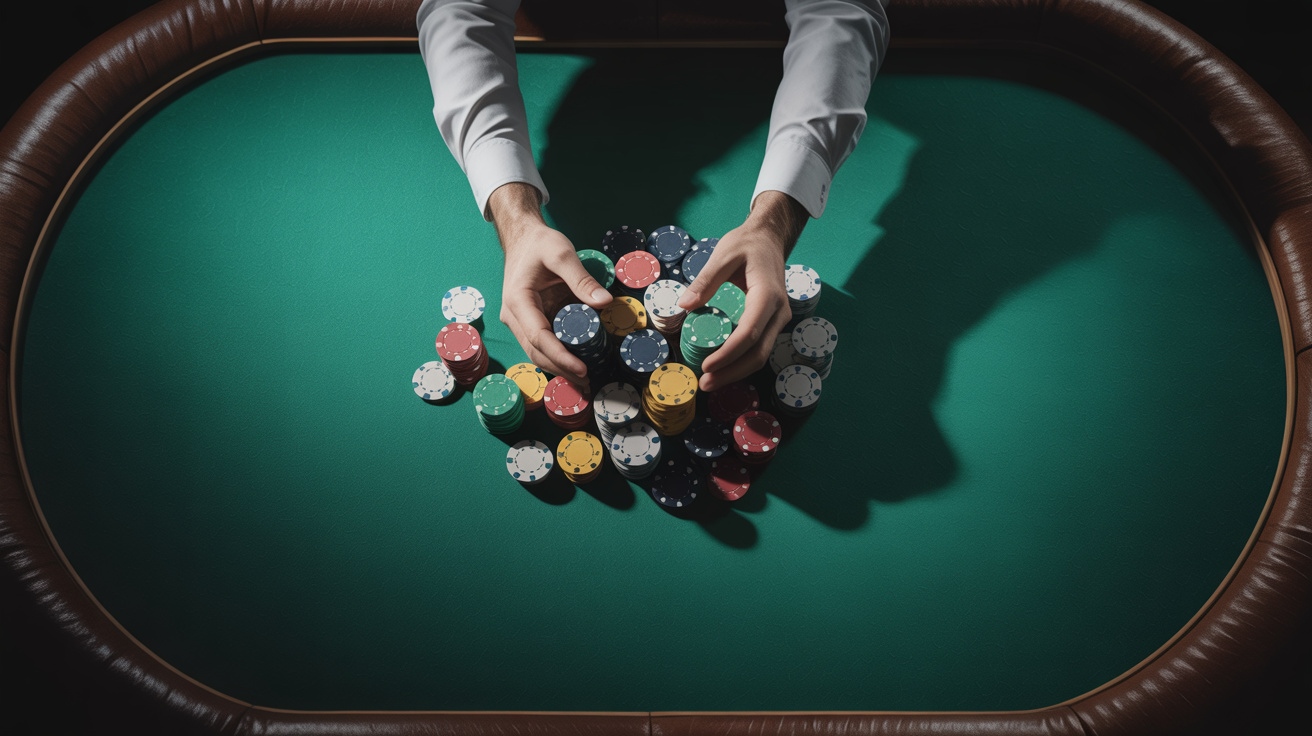
Bet Sizing Patterns Across Streets
Sizing tells compound across streets. A single bet is a data point. A pattern across three streets is a story.
The Shrinking Bet Pattern:
A player bets 75% pot on the flop, 60% on the turn, and 40% on the river. This descending pattern often indicates a hand that started strong and weakened — a top pair that got counterfeited, a flush draw that missed, a set that got outdrawn. The shrinking bet reflects diminishing confidence.
The Growing Bet Pattern:
Conversely, a player who bets 30% on the flop, 50% on the turn, and 80% on the river is often building a story — either a hand that improved (a draw that completed, a set that filled up) or a calculated bluff narrative. Watch whether the growing bets are accompanied by increasing physical tension or increasing calm. Calm growth suggests value. Tense growth suggests a constructed bluff.
The Flat Pattern:
Some players bet the same percentage regardless of street or board texture. This is either disciplined GTO play or a tell in itself — a player who has not adjusted their sizing to the actual strength of their hand. Against these players, focus less on sizing and more on timing and physical behavior.
Timing as a Sizing Amplifier
Bet sizing does not exist in isolation. It is always paired with timing, and together they form a more complete signal.
- ♠Instant large bet: Often a snap decision made from strength. The player did not need to think — the hand is clear to them.
- ♠Long pause followed by large bet: The pause indicates deliberation. This could be a player constructing a bluff narrative, or a strong player calculating the optimal sizing for maximum value. Context and baseline matter enormously here.
- ♠Instant small bet: Frequently a blocking bet or a player on autopilot. They are not engaged with the decision.
- ♠Long pause followed by small bet: This is the most suspicious pattern. Why did they need time to decide on a small bet? Either they were considering a larger bet and pulled back (possible bluff that lost nerve) or they were considering a check and decided a small bet was safer (blocking bet with a weak hand).
The intersection of timing and sizing is where the most reliable reads live.
The Meta-Game: Controlling Your Own Sizing Tells
Reading opponents is only half the equation. The other half is ensuring your own sizing tells nothing.
The most dangerous players at any table are those whose bet sizing is deliberately randomized within a strategic framework — they vary their sizing with both strong and weak hands, making it impossible to assign a reliable meaning to any single bet.
To build this discipline:
- ♠Decide your sizing before looking at your hole cards when possible, based on position and stack depth alone.
- ♠Use the same physical motion for every bet, regardless of hand strength.
- ♠Practice sizing in home games until it becomes mechanical.
The goal is to become unreadable — a blank wall that reflects your opponents' fears back at them. As explored in The Face Doesn't Lie by Faceless Champ, the most powerful position at the table belongs to the player with the most information and the least leakage.
Conclusion
Bet sizing is a language. Every wager is a sentence, and every pattern is a paragraph. The players who learn to read this language — who understand that a $237 bet into a $180 pot at 11:30 PM from a tired recreational player means something very different than the same bet from a composed professional — are the ones who consistently extract value that others leave on the table.
Study the patterns. Build the baselines. Hunt the deviations.
The chips will follow.
Faceless Champ
Poker psychology, behavioral strategy, and the hidden signals players reveal under pressure.