Eye Contact in Poker: Strategies to Read and Deceive
Discover how eye contact—or the lack of it—exposes your opponents' hands and how to weaponize your gaze at the table.
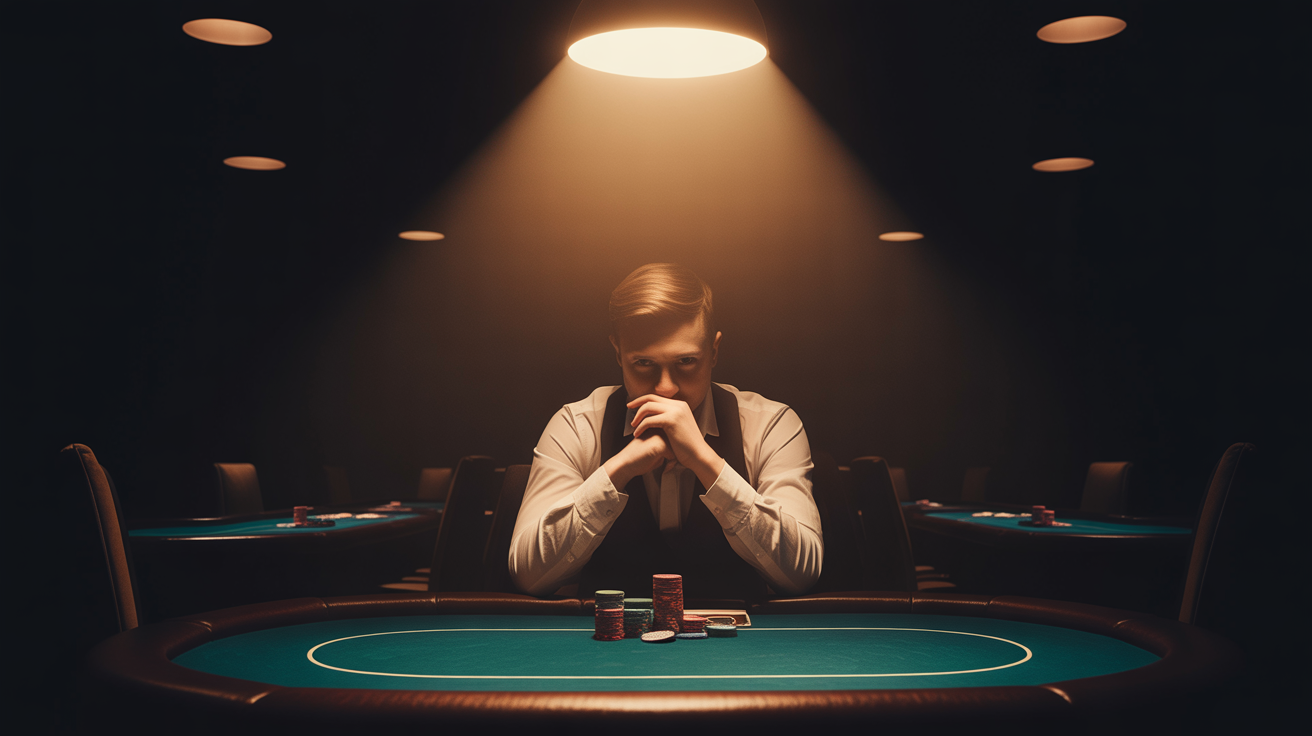
There is a moment at the poker table that separates the amateurs from the predators. It happens in the seconds after a bet lands on the felt—when the room goes quiet and every player is deciding whether to look, where to look, and for how long. Eye contact in poker is not a social courtesy. It is a weapon, a shield, and one of the most revealing behavioral signals you will encounter in a live game.
Most players treat eye contact as an afterthought. The elite treat it as a battlefield.
This guide breaks down the psychology of gaze behavior at the poker table—how to read your opponents' eye patterns, how to use your own gaze strategically, and how to neutralize the stare-downs that weaker players use to intimidate. Whether you are playing a $1/$2 cash game or a deep-run tournament, mastering eye contact will give you an edge most opponents have never considered.
Why Eye Contact Matters in Poker
The eyes are the hardest part of the face to consciously control. While experienced players can manage their expressions and keep their hands still, the eyes operate on a faster, more instinctive timeline. Gaze behavior is governed by the same limbic system that drives fight-or-flight responses—which means it leaks information before the conscious mind can intervene.
In poker psychology, this is called behavioral leakage: the involuntary signals that escape even disciplined players under pressure. Eye contact—or the deliberate avoidance of it—is one of the most consistent leakage channels you will find at a live table.
Understanding gaze behavior requires establishing a baseline. Before you can read a deviation, you need to know what normal looks like for each opponent. Spend the first orbit at any new table cataloguing how each player uses their eyes when they are not in a hand. Where do they look when they fold? Do they watch the action or stare at their chips?
Once you have a baseline, deviations become meaningful data.
The Four Gaze Patterns to Watch
1. The Avoidance Tell
When a player holds a strong hand, they often look away from the action. This seems counterintuitive—shouldn't someone with a monster want to watch the pot grow? Strong hands trigger a suppression instinct. The player is trying not to appear interested, and the easiest way to do that is to disengage visually.
What to watch for: After a player bets or raises, they look down at their chips, glance at the board, or disengage visually. This avoidance is often paired with a stillness in the body—the freeze response that accompanies genuine confidence.
In practice: You are on the river with a marginal bluff-catcher. Your opponent fires a large bet and immediately looks away, toward the board. Their body goes still. This combination—avoidance plus freeze—is a strong indicator of a value hand. Folding is often correct.
2. The Stare-Down Tell
The deliberate stare is one of the most misunderstood signals in poker. Many players believe that staring down an opponent is a sign of strength—a dominance display. In reality, the opposite is more often true.
When a player is bluffing, they frequently overcompensate by making intense, sustained eye contact. The logic is unconscious: If I look confident, they will believe me. But this manufactured confidence is itself a tell. Genuine strength rarely requires performance.
What to watch for: A player who bets and then locks eyes with you, holding the gaze longer than is socially natural. The stare is often accompanied by a slight forward lean, a rigid jaw, or a forced stillness that looks rehearsed rather than relaxed.
In practice: You are facing a river shove on a board that missed most draws. Your opponent is staring directly at you, unblinking. Their jaw is set. This is the profile of a player projecting confidence they do not feel. The call becomes significantly more attractive.
3. The Glance Tell
The glance tell is subtle but one of the most reliable signals in live poker. It occurs when a player involuntarily looks at something that reveals their intention—most commonly, their chips or the pot.
Chip glance: A player who glances at their chips immediately after seeing the flop is often planning to bet. The glance is a micro-rehearsal—the brain calculating the action before the player consciously decides.
Pot glance: A player who glances at the pot after a bet lands is often calculating pot odds or considering a call. Less diagnostic than the chip glance, but still useful for narrowing ranges.
What to watch for: These glances happen in fractions of a second. Train yourself to watch opponents' eyes the moment the community cards are revealed—not your own hand.
4. The Pupil Response
Pupil dilation is an involuntary response controlled by the autonomic nervous system. When a player sees something exciting—a strong hand, a favorable board texture—their pupils dilate. When stressed or holding a weak hand, pupils may constrict.
The challenge is that pupil response is difficult to observe in casino lighting. However, in home games or smaller live settings, it is a legitimate data point. If you are seated directly across from an opponent and notice their pupils visibly widen after they look at their hole cards, treat that as a signal of genuine hand strength.
How to Use Your Own Eye Contact Strategically
Reading opponents is only half the equation. The other half is controlling what your own eyes communicate.
Establish a Neutral Default
The goal is to make your gaze behavior consistent regardless of hand strength. Choose a default resting point—many elite players focus on the dealer's hands or a fixed point on the felt—and return to it habitually. This eliminates the avoidance and stare-down patterns that leak information.
The Deliberate Misdirection
Once you understand that opponents are reading your gaze, you can use it as a deception tool. When you are bluffing, practice the relaxed, slightly disengaged look of a player with a strong hand. When you have the nuts, you can occasionally deploy the manufactured stare to plant doubt.
This is high-level play and requires practice. The risk is that inconsistent gaze behavior can itself become a tell. Start by focusing on neutrality before attempting active misdirection.
The Observation Drill
Here is a practical drill: In your next live session, spend the first 30 minutes not looking at your own hole cards until it is your turn to act. Instead, watch every other player's eyes from the moment the cards are dealt. You will be surprised how much information is available before a single chip is moved.
This drill is referenced in The Face Doesn't Lie by Faceless Champ as one of the foundational exercises for developing live read capability—an essential resource for building a systematic edge. [Internal link: /blog/reading-micro-expressions-poker-table]
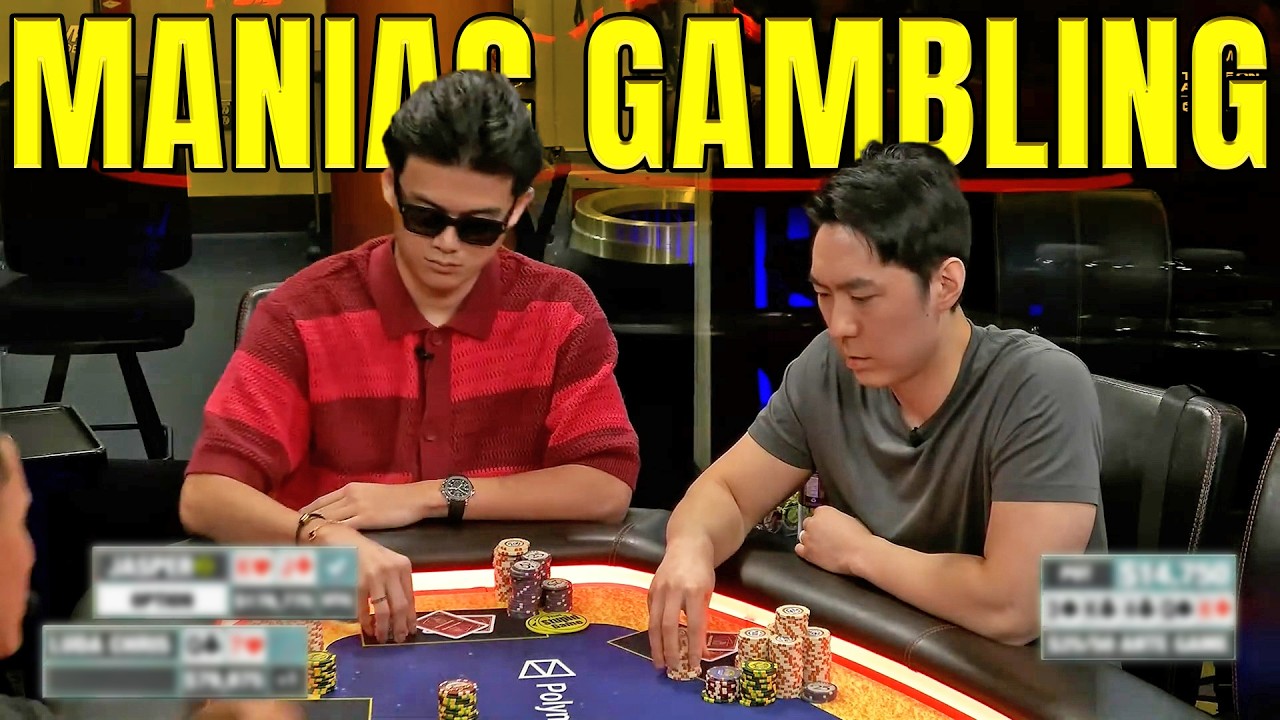
Gaze Behavior in Tournament vs. Cash Game Contexts
The stakes affect gaze behavior significantly. In cash games, players are more relaxed and tells tend to be subtler. In tournament play—especially near the bubble or at a final table—cognitive load increases dramatically, and behavioral leakage becomes more pronounced.
Near the bubble: Short-stacked players desperate to survive often exhibit heightened avoidance when bluffing. The fear of elimination amplifies the suppression instinct. Watch for players who refuse eye contact after shoving—this is frequently a steal attempt.
At the final table: ICM pressure creates a unique psychological environment. Large-stack players often display relaxed, open gaze behavior. Short stacks oscillate between avoidance (when bluffing) and the manufactured stare (when value-betting and hoping to get called).
3-bet and c-bet situations: When a player 3-bets pre-flop and fires a c-bet on the flop, watch their eyes the moment the community cards are revealed. A player who glances at their chips immediately is likely planning to continue regardless of texture—a sign of a polarized range or a mechanical c-bet strategy. A player who looks at the board, then at you, then back at the board is processing—suggesting a more nuanced, texture-dependent range.
Building Your Eye Contact Playbook
Mastering gaze behavior is not a one-session project. It is a skill that compounds over time as you accumulate data on specific opponents and refine your baseline-reading ability. Here is a simple framework:
- ♠Early sessions: Focus exclusively on establishing baselines. Do not attempt to make reads. Just observe and note.
- ♠Mid-stage: Begin cataloguing specific gaze patterns for each opponent type—aggressive, passive, recreational, or professional.
- ♠Advanced play: Integrate gaze data into your decision-making, weighting it alongside bet sizing, timing, and board texture.
Eye contact is one of the richest data streams available at a live table. Most of your opponents are leaving it completely unread. That is your edge.
For a deeper dive into the full spectrum of involuntary behavioral signals—including micro-expressions, postural shifts, and vocal tells—The Face Doesn't Lie by Faceless Champ provides the most comprehensive framework available for live poker reads. [Internal link: /book]
The table never lies. Neither does the face—if you know how to read it.
Faceless Champ
Poker psychology, behavioral strategy, and the hidden signals players reveal under pressure.