Poker Posture Tells: How Body Language Reveals Decisions
Posture never lies. Discover how subtle shifts in body language expose your opponents' hand strength and decision-making process.
Poker Posture Tells: How Body Language Reveals Decisions
Every hand you play is a negotiation conducted in silence. While your opponents focus on their cards and pot odds, their bodies are broadcasting something far more valuable — the truth. Posture is one of the most overlooked and most reliable tells in live poker. It operates below conscious awareness, driven by the autonomic nervous system, and it changes in real time as players process decisions under pressure.
If you know what to look for, you'll never need to guess again.
Why Posture Is a Tier-One Tell
Most players obsess over facial expressions or bet sizing patterns. These are valid reads, but they're also the tells experienced players work hardest to control. Posture is different. It's governed by deep-seated neurological responses — the same fight-or-flight mechanisms that kept our ancestors alive. When a player is genuinely strong, their body relaxes into comfort and control. When they're bluffing or uncertain, the body contracts, braces, or performs subtle protective behaviors.
The key concept is cognitive load. When running a bluff, a player's brain works overtime — constructing a narrative, managing their expression, calculating fold equity, and monitoring your reactions simultaneously. This overload bleeds into the body. Muscles tighten. Breathing becomes shallow. Posture shifts in ways the player doesn't consciously register.
Your job is to register it for them.
The Baseline: Your Most Important First Step
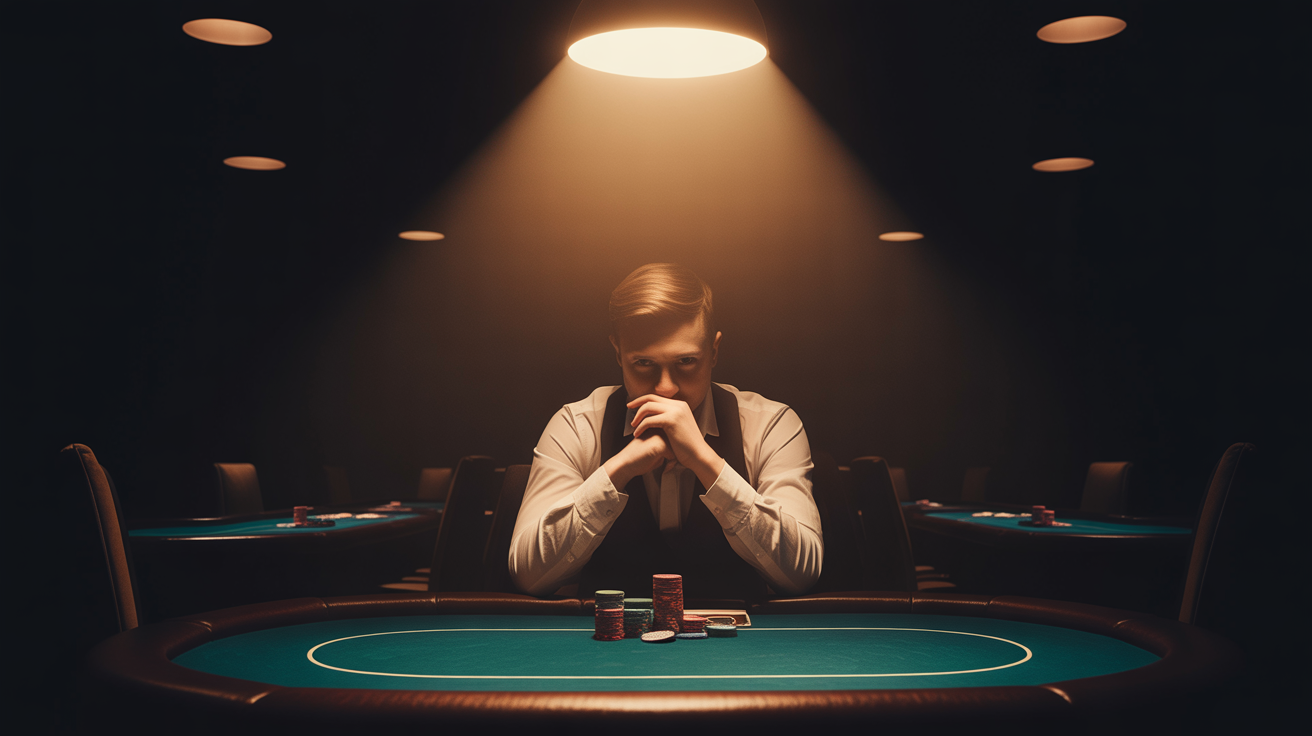
Before you can read a deviation, you need to establish a baseline. Spend the first orbit at any new table doing nothing but observing. How does each player sit when they fold preflop? How do they position themselves when they're in a hand they clearly don't care about? That relaxed, disengaged posture is their neutral state.
Everything you observe during a contested hand must be measured against that baseline. A player who normally leans back and crosses their arms but suddenly sits forward with both hands on the table is showing you something. The change is the tell — not the posture itself.
Observation drill: For your next three live sessions, spend the first 20 minutes folding every hand and cataloguing baseline postures. Note spine angle, arm placement, shoulder height, and head position for each player. This investment pays dividends for the entire session.
H2: The Strength Cluster — What Confidence Looks Like
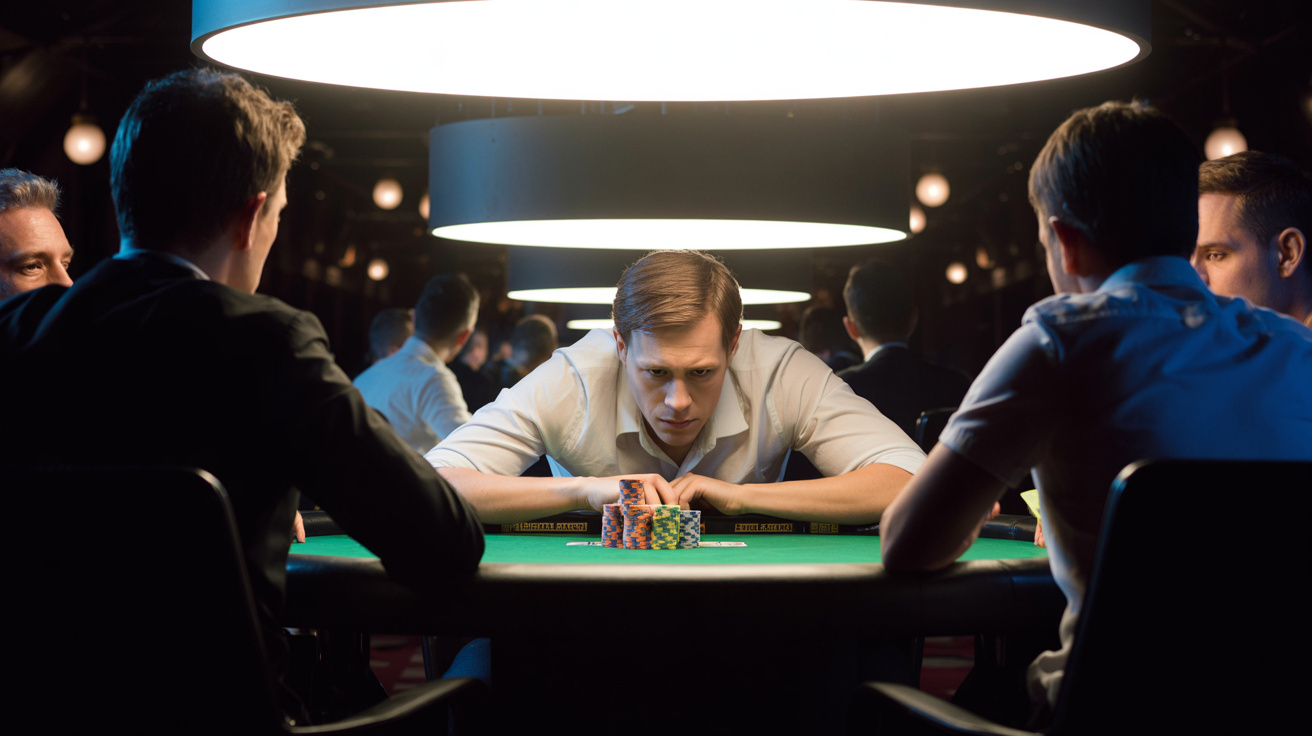
When a player holds a genuinely strong hand, their body tends to exhibit what behavioral scientists call an approach posture. The body opens up, expands, and orients toward the action. Specific signals include:
- ♠Forward lean: The player shifts their weight toward the table, subtly closing the distance between themselves and the pot. This is an unconscious territorial claim — the body moving toward something it wants.
- ♠Squared shoulders: Tension drops from the trapezius muscles. The shoulders settle back and down rather than rising toward the ears.
- ♠Stillness: Strong players with strong hands often become very still. The nervous energy that drives fidgeting disappears when the outcome feels certain.
- ♠Open hand placement: Palms resting flat or loosely on the table, rather than gripping chips or cards tightly.
Scenario: The River Overbet
You're in a $2/$5 game. The board runs out A♠ K♦ 7♣ 2♥ 9♠. Your opponent, who has been relatively animated throughout the hand, suddenly goes quiet and still as they reach for chips to make a pot-sized overbet on the river. Their shoulders drop. They lean slightly forward. Their hands move with deliberate calm.
This is not the posture of a bluff. This is the posture of someone who has already decided they're going to get paid. Proceed with extreme caution.
H2: The Weakness Cluster — What Deception Looks Like
Bluffing is physiologically expensive. The body knows the difference between a genuine threat and a manufactured one, and it responds accordingly. When a player is running a bluff or holding a marginal hand they're unsure about, look for:
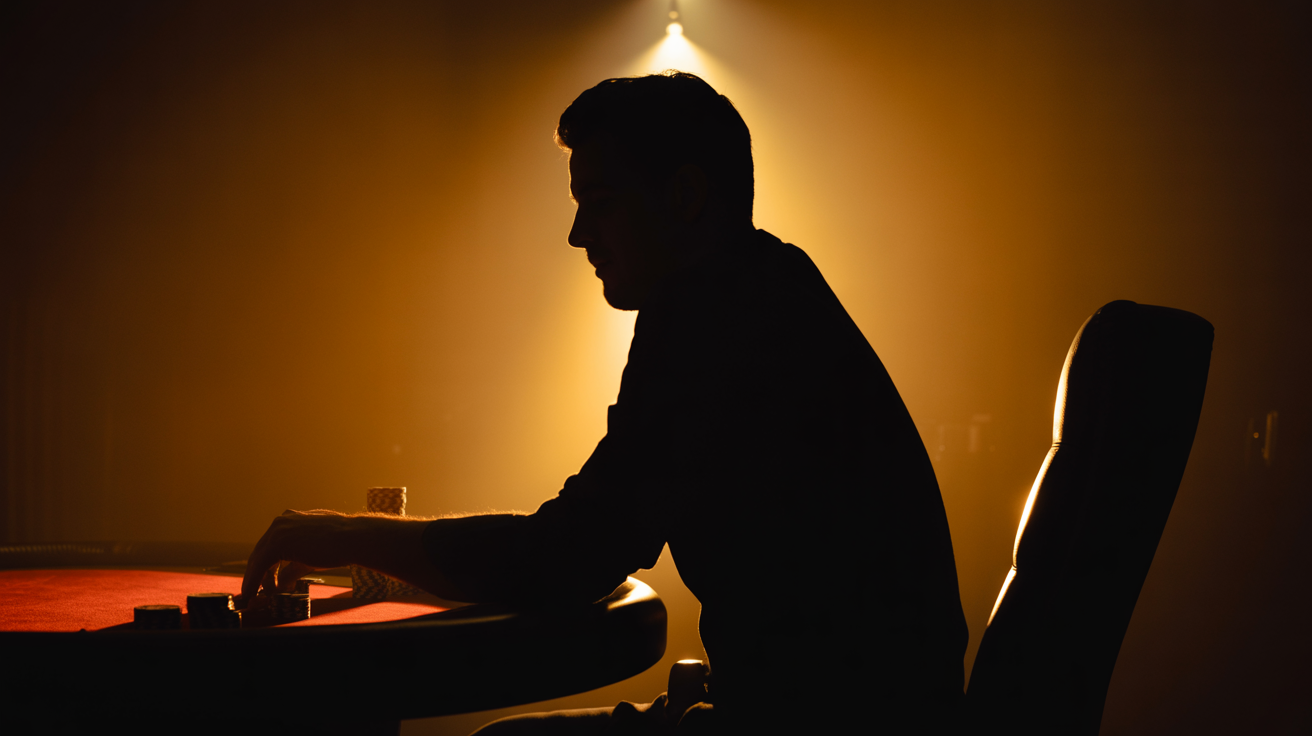
- ♠Postural contraction: The body pulls inward. Shoulders rise toward the ears. The spine curves slightly. This is a protective response — the body making itself smaller in anticipation of conflict.
- ♠Torso rotation away from the pot: A subtle but powerful tell. When players are uncomfortable with the action, they unconsciously angle their body away from the source of stress — the pot, the board, or you.
- ♠Rigid stillness (different from strength stillness): There's a quality difference between the stillness of confidence and the stillness of someone who has frozen under pressure. The latter looks locked — jaw tight, neck stiff, breathing visibly suppressed.
- ♠Grooming gestures: Touching the face, adjusting clothing, or running a hand through hair are displacement behaviors — the brain releasing tension under stress.
Scenario: The Missed Draw Bluff
The board is Q♥ J♦ 10♠ 2♣ 3♦. Your opponent bet the flop and turn aggressively. On the river, they fire a large bet. But their shoulders have crept toward their ears, their torso rotated away from the pot, and one hand covers the other in a self-soothing gesture.
They missed their straight draw. The river c-bet is desperation. Their body told you before their chips hit the felt.
H2: Timing and Posture — Reading the Decision Process
Posture doesn't just reveal hand strength — it reveals the decision-making process itself. Watch how a player's body changes as they move through a decision:
The snap decision: A player who acts immediately with no postural change is operating on autopilot — they've already decided. This is common with very strong hands (snap-call) or very weak hands (snap-fold). The absence of a postural shift is itself information.
The deliberate decision: When a player genuinely wrestles with a decision, you'll see micro-shifts in posture — a slight forward lean followed by a pull back, shoulders rising and falling. This is the body mirroring internal conflict. A player in this state is genuinely uncertain, likely on a marginal hand — not a monster, not air.
The performed deliberation: This is the most dangerous pattern to misread. An experienced player may fake deliberation on a strong hand to induce a call. The tell: postural shifts look mechanical — too symmetrical, too controlled. Genuine uncertainty produces organic, asymmetric movement. Performed uncertainty looks rehearsed.
H2: Managing Your Own Posture
Reading others is only half the equation. If you're broadcasting your own hand strength through posture, you're giving away information at the same rate you're collecting it.
The discipline of neutral posture: Develop a default sitting position that you return to regardless of hand strength. Spine straight, shoulders relaxed, both feet flat on the floor, hands resting loosely on the table or in your lap. Practice this at home until it becomes automatic.
Controlled breathing: Shallow breathing is a tell. In big hands, consciously slow your breathing — inhale for four counts, exhale for four counts. This activates the parasympathetic nervous system, reduces visible stress signals, and keeps your posture from contracting under pressure.
The 3-bet test: Next time you 3-bet as a bluff, notice what your body wants to do. Most players feel an urge to pull back, to make themselves smaller. Resist it. Maintain your baseline posture. That discipline separates elite players from the field.
For a deeper framework on controlling your own physical tells, The Face Doesn't Lie by Faceless Champ provides a comprehensive system built for the poker environment — covering micro-expression suppression to full-body behavioral management. [Internal link: /blog/reading-micro-expressions-poker-table]
H2: Putting It Together — The Posture Read in Practice
Posture reads are most powerful when they confirm or contradict other information you've already gathered. Use them as a second layer of analysis, not a standalone tell.
The confirmation read: Your hand reading suggests your opponent is on a flush draw. On the river, they bet. Their posture contracts — shoulders up, torso angled away. The posture confirms the missed draw. You call.
The contradiction read: Your hand reading suggests strong top pair. But on the river, after a scare card hits, their posture shifts — they lean forward, go still, shoulders drop. The posture contradicts your range read. They may have made a full house. You fold.
The isolation read: Sometimes the hand history gives you nothing. The posture is all you have. In these moments, trust the body over the story. The body doesn't construct narratives. It responds to reality.
The Edge That Compounds
Posture reading is a skill that compounds over time. The more baselines you catalogue, the more deviations you catch. The more accurate your reads become, the more confident your decisions — and the more your own posture projects the calm authority that makes opponents second-guess themselves.
The table is a room full of people telling you exactly what they're holding. Most players are too focused on their own cards to listen.
You're not most players.
For a complete system integrating posture reads with micro-expression analysis and behavioral profiling, explore The Face Doesn't Lie by Faceless Champ — the definitive guide to reading opponents at the highest level. [Internal link: /book]
Faceless Champ
Poker psychology, behavioral strategy, and the hidden signals players reveal under pressure.