Chip Handling Tells: What Your Hands Reveal at the Table
Your hands betray you before your face does. Learn to decode chip handling patterns that reveal true hand strength.
Chip Handling Tells: What Your Hands Reveal at the Table
Most players obsess over the face. They study eyes, watch for lip compression, scan for the micro-twitch of a suppressed smile. But experienced readers know the truth: the hands often betray a player long before the face does.
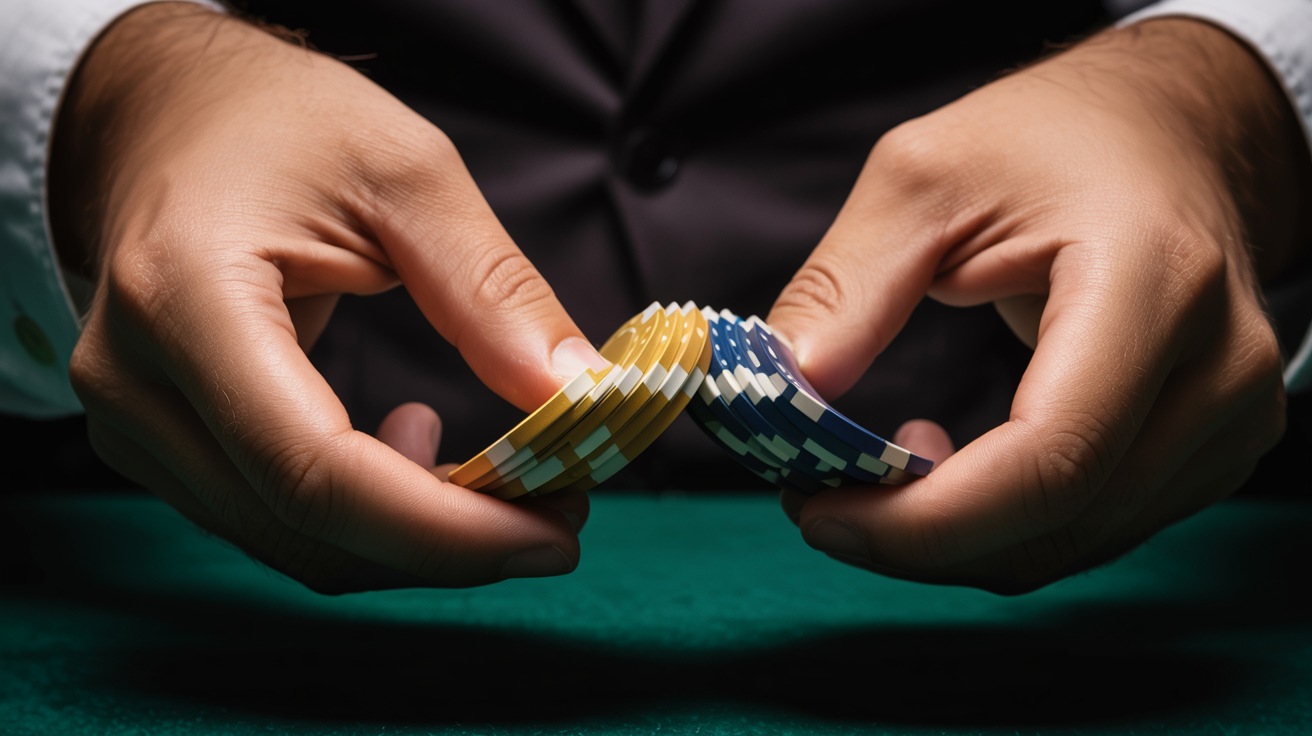
Chip handling is one of the most underutilized behavioral tells in live poker. It's tactile, habitual, and deeply tied to emotional state — which makes it extraordinarily difficult to fake consistently. Whether a player is stacking, splashing, or simply fingering their chips, every movement carries signal. Your job is to learn how to decode it.
Why Chip Handling Reveals So Much
The hands are connected to the autonomic nervous system in ways that are hard to consciously override. When a player is excited, anxious, confident, or uncertain, that emotional state leaks through fine motor behavior — the speed of a stack, the firmness of a bet, the restless riffling of chips between fingers.
This is what psychologists call behavioral leakage: involuntary physical signals that escape conscious control. Unlike a practiced poker face, chip handling is rarely rehearsed. Players focus on controlling their expressions, their voice, their eye contact. The hands are left to operate on autopilot — and autopilot tells the truth.
Understanding chip handling tells requires you to first establish a baseline. Watch how a player handles their chips when they're folding routine hands, when they're in no pressure situation. That's their neutral state. Any deviation from that baseline under pressure is your signal.
The Core Chip Handling Patterns
1. The Confident Stack
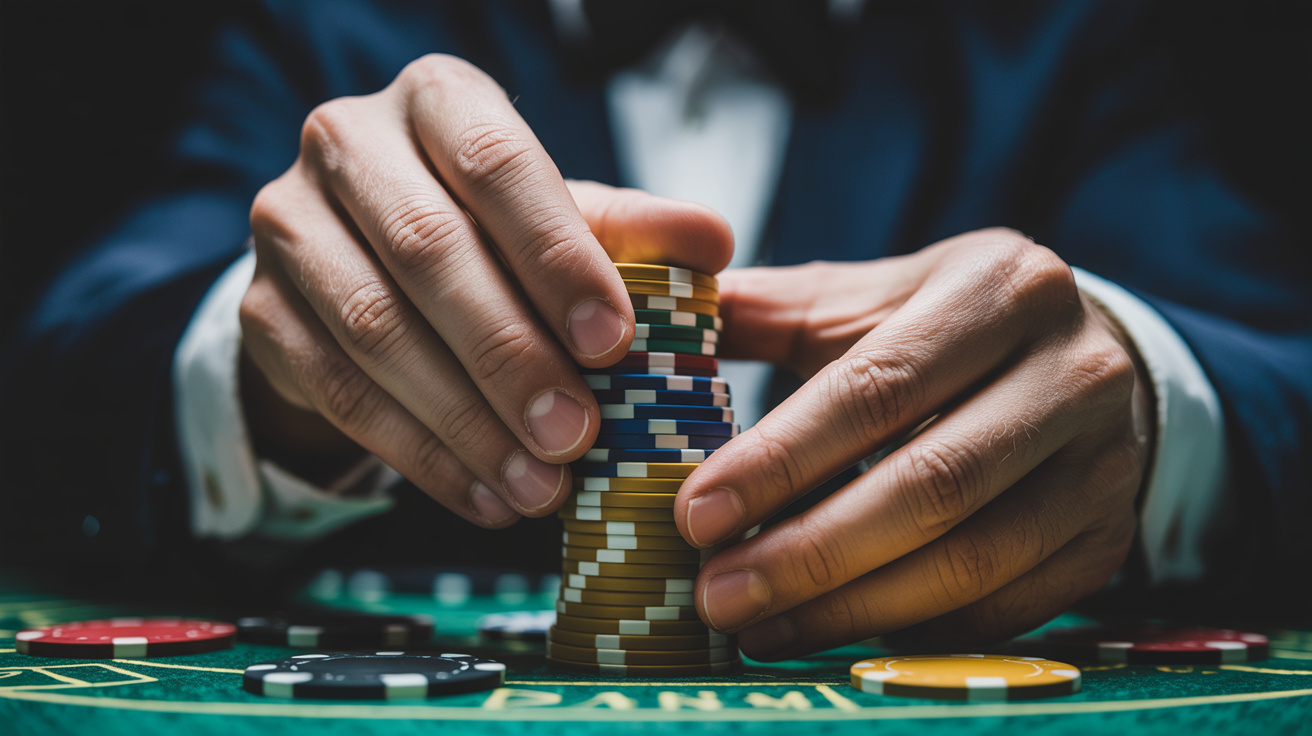
When a player has a strong hand, you'll often see deliberate, organized chip behavior. They stack neatly. They count precisely. Their movements are slow and controlled — not because they're trying to appear calm, but because genuine confidence produces calm.
Watch for the player who, after looking at their hole cards, begins methodically organizing their stack. This isn't always a tell on its own, but combined with other signals — relaxed posture, steady breathing, unhurried decision-making — it often indicates comfort with their holding.
Observation drill: In your next live session, note which players stack chips after looking at their cards versus before. The post-peek stack is often a subconscious preparation for action.
2. The Nervous Riffle
Chip riffling — the rapid back-and-forth shuffle of a chip stack between the fingers — is a common self-soothing behavior. When a player who normally riffles stops riffling after seeing their cards or facing a large bet, that freeze is significant.
Conversely, a player who suddenly starts riffling when they weren't before may be managing anxiety. The key is change from baseline, not the behavior itself.
Scenario: You're on the river. The board reads K♠ 9♦ 4♣ 2♥ 7♠. You've fired a third barrel. Your opponent, who has been calmly stacking chips throughout the hand, suddenly begins riffling a single chip between their fingers. That shift in behavior — from stillness to movement — suggests discomfort. They may be holding a marginal hand, weighing a hero call against the pot odds.
3. The Splash Bet
How a player physically places their bet into the pot is one of the most revealing chip tells in poker. There are two dominant patterns:
- ♠The deliberate placement: Chips are moved forward carefully, often in a neat stack. This is associated with confidence and value betting. The player isn't trying to intimidate — they're simply executing.
- ♠The splash or toss: Chips are thrown or splashed into the pot with force or flair. This is frequently a bluff tell. The aggressive physical action compensates for the weakness of the hand. It's a performance designed to project strength.
This aligns with the broader psychological principle that genuine strength is quiet. A player who has flopped a set doesn't need to throw chips. They know they're ahead. The splash is theater.
4. Chip Fondling and Hesitation
Watch for players who pick up chips, hold them, and then put them back down without betting. This hesitation pattern — sometimes called chip fondling — often indicates a player who wants to bet but is uncertain. They may have a draw, a marginal made hand, or they're considering a bluff they ultimately abandon.
If you see this behavior and then the player checks, they've likely shown you weakness. A c-bet or probe bet on the next street may take the pot uncontested.
5. The Overbet Stack Preparation
Some players unconsciously prepare their bet before the action reaches them. They'll begin counting out chips — sometimes even moving them forward slightly — before it's their turn. This is a strong hand tell in most cases. The player is eager to act. They're not deliberating; they're waiting.
This is particularly useful in multi-way pots. If a player to your left is already reaching for chips while you're still deciding, factor that into your decision. They likely have a hand they want to play.
Reading Chip Tells in Context: A Hand Scenario
You're in a $2/$5 live game. You open UTG+1 with A♥ K♦ to $15. The button calls. The flop comes A♠ 8♣ 3♥.
You c-bet $25. The button calls.
Turn: J♦. You check. The button reaches for chips immediately — not hesitating, not riffling — and bets $60 with a clean, deliberate forward motion.
What does this tell you?
The immediate reach suggests eagerness, not deliberation. The clean placement suggests confidence, not performance. Combined with the button's call on the flop (which could include sets, two-pair, AJ, or a slow-played pocket pair), this chip behavior is consistent with a strong made hand.
You're likely behind. A fold or a careful call with a plan to reassess the river is appropriate. This is not the spot to 3-bet bluff.
Now imagine the same scenario, but the button splashes the $60 into the pot with a slight toss, then leans back. The physical aggression of the bet, combined with the lean-back (a distancing behavior), suggests a bluff or a semi-bluff. A raise here may take the pot immediately.
Managing Your Own Chip Tells
Reading others is only half the equation. You are also being read.
Develop a consistent, neutral chip-handling routine regardless of hand strength. This means:
- ♠Always bet with the same physical motion — deliberate, forward, clean
- ♠Never splash chips when bluffing (it's a tell you're giving away for free)
- ♠Avoid touching your chips until it's your turn to act
- ♠Practice riffling or stacking as a neutral habit, not a reactive one
The goal is to make your chip behavior uninformative. If your opponent can't distinguish your value bet motion from your bluff motion, you've eliminated an entire category of reads they might use against you.
This concept is explored in depth in The Face Doesn't Lie by Faceless Champ, which covers the full spectrum of involuntary behavioral signals — from micro-expressions to physical tells — and how to both read and suppress them at the highest levels of play.
Building a Chip Tell Observation System
To systematically exploit chip handling tells, build a simple mental framework:
Before the hand: Note each player's neutral chip behavior. Are they rifflers? Stackers? Do they leave chips untouched?
On the deal: Watch for any immediate change after players look at their hole cards. Sudden organization, sudden stillness, or sudden movement are all data points.
On each street: Track how bets are placed. Deliberate or splashed? Immediate or hesitant? Does the behavior match the board texture and the player's range?
After showdown: Correlate what you observed with what they held. Over time, you'll build a behavioral profile for each player at your table.
This is opponent profiling at its most granular — and it's available to anyone willing to pay attention.
The Deeper Psychology: Why Hands Don't Lie
The hands are among the most expressive parts of the human body. Evolutionary psychology suggests this is because hands were critical to survival — tool use, combat, communication. The brain devotes enormous neural real estate to hand control, and emotional states directly influence fine motor behavior.
When a player is under cognitive load — calculating pot odds, constructing ranges, managing fear of a bad beat — their conscious attention is occupied. The hands revert to emotional autopilot. That's when the tells emerge.
This is why chip handling tells are most reliable in high-pressure moments: large bets, river decisions, all-in situations. The more a player's conscious mind is occupied, the more their hands reveal.
For a comprehensive breakdown of how cognitive load affects behavioral leakage across all physical channels — not just the hands — The Face Doesn't Lie provides the definitive framework for live poker readers.
Final Thoughts
The face gets all the attention. The hands do all the talking.
Chip handling patterns are a window into a player's emotional state, confidence level, and hand strength — available in every live game, on every street, for every player willing to look. Start with baseline observation. Track deviations. Correlate behavior with holdings at showdown.
Over time, the chips will tell you everything you need to know.
Master the read. Control the table.
Faceless Champ
Poker psychology, behavioral strategy, and the hidden signals players reveal under pressure.